
What is Participatory Drama? — and Why Does It Matter in Schools & Nurseries?
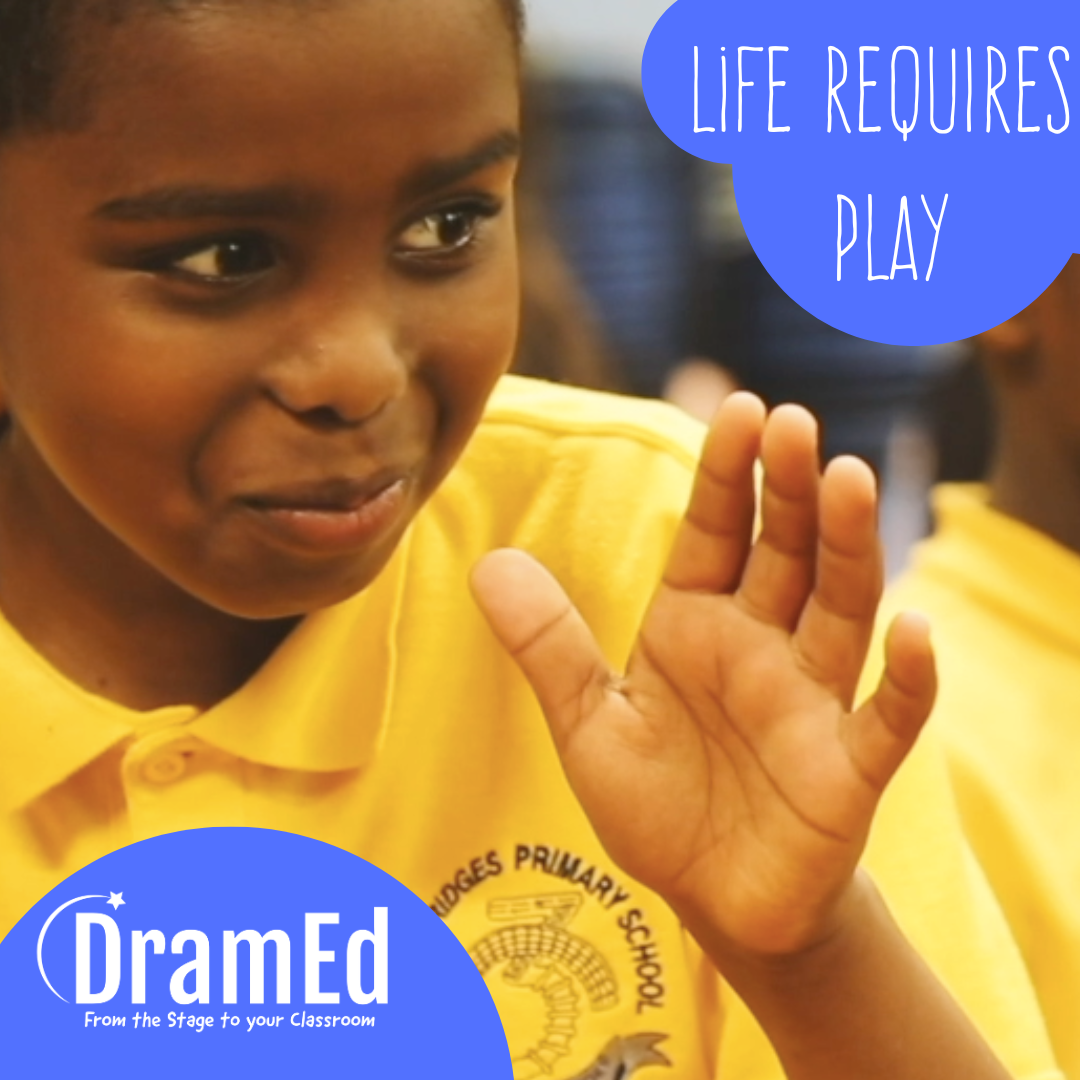
A young boy steps into character during an indoor DramEd drama session.
Exploring how story, role-play, and shared imagination unlock learning in the classroom and beyond.
‘Drama is not just performance. When children step into a story together, they are rehearsing life — building empathy, language, and understanding in ways that worksheets simply cannot reach.’
If you've ever watched a group of four-year-olds spontaneously become pirates, doctors, or dragons — you've seen Participatory Drama in its most natural form. But in educational settings, this instinct for imaginative play can be harnessed intentionally, with remarkable results across all age groups.
This post explores what Participatory Drama is, where it comes from, and how practitioners in nurseries and schools are using it to transform learning every day.
What is Participatory Drama?
Participatory Drama (sometimes called process drama or educational drama) is an approach to learning through dramatic activity in which everyone participates — not as an audience, but as active contributors to an unfolding story or scenario.
Unlike school plays or performance-based theatre, the goal is not a polished product for an audience. The goal is the experience itself — the thinking, feeling, decision-making, and meaning-making that happens when children and young people inhabit a narrative together.
"It's about being in the story, not watching it."
The teacher or practitioner works alongside the children, often taking on a role themselves — guiding the drama from within rather than directing from outside.
Rooted in the pioneering work of educators like Dorothy Heathcote and Gavin Bolton, Participatory Drama has been developed and refined over decades into a rich set of practical techniques that work brilliantly from the nursery floor to the secondary classroom.
Core Principles
Everyone has a role
No child is a bystander. Each participant is inside the drama, with a voice and a stake in what happens.
Fictional frame, real learning
In Key Stage Two programmes, children engage with real concepts — justice, community, loss, courage — through the safety of pretend.
Dialogue over performance
The emphasis is on conversation, questioning and reflection — not rehearsed lines or a final show.
Flexible and responsive
The practitioner follows the children's lead, adapting the story as it develops naturally.
How is it Used in Nurseries?
In nursery settings (ages 2–5), Participatory Drama aligns naturally with how young children learn — through play, story, and physical engagement. Practitioners draw on it to support all areas of the EYFS framework, often without children even realising they're "doing drama."
NURSERY & RECEPTION
Ages 2–5: Story as a World
In the nursery, a practitioner might begin a session by bringing in a mysterious object — a battered suitcase, a letter, a tiny shoe — and inviting children to wonder together: Who does this belong to? Where did they go? Can we help them?
This small act of narrative invitation draws children into a fictional world they want to inhabit. The practitioner then sustains and deepens that world through questions, actions, and gentle role-taking — becoming "the helper at the post office" or "the old woman who lives in the forest."
Common techniques include Mantle of the Expert (children become the experts — the rescuers, the builders, the doctors), small world play with structured storytelling, and freeze-frame moments where the group pauses to reflect on what a character might be thinking or feeling.
What it looks like day-to-day in the nursery:
Warm-up rituals and story circles
Gathering in a circle around a prop or image to begin the imaginative journey together — building a shared sense of "we are going somewhere."
Teacher in role
The practitioner takes on a character (often using a simple costume marker like a hat or scarf), which gives children permission to engage as characters too — and creates a wonderful sense of shared make-believe.
Freeze and think
Pausing the drama at a moment of tension to ask: "What should we do next? How is this character feeling right now? What might happen if…?"
Storytelling with props
Using physical objects — puppets, baskets, maps, fabric — to anchor the imaginative world and give children's sensory engagement a foothold in the story.
How is it Used in Schools?
KS1 & KS2
Ages 5–11: Drama Across the Curriculum
In primary schools, Participatory Drama becomes a powerful cross-curricular tool. A history topic on the Great Fire of London becomes a drama where children are Londoners making desperate decisions. A PSHE lesson on bullying is explored through a fictional school where the children must advise the headteacher.
The fictional frame gives children emotional distance — they can explore difficult themes (fear, injustice, loss) without personal vulnerability, while still developing genuine emotional literacy and moral reasoning.
Drama also becomes a powerful vehicle for oracy development — particularly valuable for children who are English as an Additional Language learners, or those who find traditional classroom discussion intimidating.
‘When a child steps into a role, they don't just pretend — they practise being someone else, and return to themselves a little more complete.’
Techniques used in primary schools:
Hot Seating
A child (or the teacher) sits as a character in the "hot seat" and answers questions from the class in role. Brilliant for character study in literacy, or exploring historical perspectives.
Still Image / Freeze Frame
Groups create a frozen tableau — like a photograph — of a moment in a story. Others interpret what is happening. Builds inference, empathy, and visual literacy.
Thought Tracking
While a freeze-frame is held, the teacher taps each participant on the shoulder and they speak their character's inner thought aloud. Deepens emotional understanding and perspective-taking.
Conscience Alley
Two lines of children voice opposing arguments as a character walks between them, facing a dilemma. Ideal for exploring moral choices in PSHE or complex story moments.
Mantle of the Expert
Children become a team of experts — scientists, architects, historians — with a real problem to solve within the fictional frame. Combines drama with deep subject enquiry.
Why Does it Work? The Evidence for Learning
The benefits of Participatory Drama are not just anecdotal. A growing body of research supports its effectiveness across multiple dimensions of child development.
What Participatory Drama develops:
Oracy and spoken language skills
Empathy and emotional intelligence
Reading comprehension and inference
Moral reasoning and critical thinking
Social skills and collaborative working
Confidence and self-expression
Vocabulary acquisition (inc. EAL learners)
Engagement and motivation to learn
Understanding of diverse perspectives
Resilience and emotional regulation
One of drama's most powerful features is its ability to reach children who don't flourish in traditional classroom contexts. The kinaesthetic learner, the reluctant speaker, the child who struggles with abstract ideas — all find accessible entry points through story, movement, and role.
The EYFS and drama:
Participatory Drama sits naturally within the EYFS prime areas — particularly Communication and Language, Personal, Social and Emotional Development, and Expressive Arts and Design. When planned thoughtfully, a single drama session can authentically address learning across multiple areas simultaneously.
Getting Started: Practical Tips for Practitioners
You don't need a drama background to use Participatory Drama in your setting. Here are a few principles to guide you:
Start small and stay curious.
A single mysterious object and a genuine question ("I wonder who left this here…") is enough to open a drama. Trust the children's instincts — they are natural story-makers.
Use "teacher in role" with confidence. A simple prop — a pair of glasses, a clipboard, a hat — is all you need. Children understand and love the convention immediately. You don't need to be a skilled actor; you need to be genuinely curious alongside them.
Protect the frame. If things get too chaotic or a child breaks the drama, simply step outside it yourself: "Let's pause the story for a moment…" and gently re-enter when ready. The fictional frame is a gift — protect it without rigidity.
Reflect together. Some of the richest learning happens after the drama ends. Make time for circle reflection: What happened in our story? How did your character feel? What would you do differently?
Connect it to your curriculum. Participatory Drama is not an "extra" — it is a method. Bring it to your history topic, your PSHE unit, your class reading book. The story is already there; drama simply lets children live inside it.
Drama is Every Child's Birthright
Long before children can read or write, they can imagine, pretend, and feel alongside others. Participatory Drama honours that instinct — and builds upon it to create some of the most powerful, inclusive, and joyful learning experiences in any early years or primary setting.
Whether you're a nursery practitioner exploring story-making for the first time, or an experienced primary teacher looking for fresh approaches to oracy and PSHE, Participatory Drama offers a rich and endlessly adaptable toolkit.
The invitation is simple: bring a story into the room, step inside it with your children, and see what you find together.
